

No products in the cart.

-37%


CCTV & Networking



VEDIO BALUN 8 MB BNC DC TO RJ 45 NET WORK TRANSECIVER LAN TYPE
8MP Video Balun lan (BNC DC to RJ45)
-
Ultra-High Definition (UHD) Support: Transmits video resolutions up to 8 Megapixel (8MP / 4K).
-
Universal HD Compatibility: Supports all major HD Analog formats: HD-CVI, HD-TVI, AHD, and traditional CVBS (Analog).
-
Power and Video Over Single Cable (PV)
-
Cost-Effective Cabling
-
Passive Operation
-
Easy Plug & Play Connectors
-
Long-Distance Transmission
₹190.00 ₹300.00
Bulk Quantity Discounts!
1 - 9
pieces
₹190.00
10 - 24 pieces
₹180.00
(5% off)
25+ pieces
₹175.00
(7% off)
A Video Balun 8MP PV Passive BNC DC to RJ45 Network Transceiver is a device used primarily in CCTV (Closed-Circuit Television) security camera systems to transmit high-resolution analog video (up to 8MP/4K) and sometimes power over a standard twisted-pair UTP (Unshielded Twisted Pair) cable, like Cat5e or Cat6, instead of traditional coaxial cable.
Key Components and Function
-
Video Balun: A Balun (an abbreviation for Balanced-unbalanced) is a transformer or circuit that converts a balanced signal (like the one used in UTP/Ethernet cable) to an unbalanced signal (like the one used in coaxial cable) and vice-versa. Its main job here is to allow the video signal to be reliably transmitted over the twisted pair cable. *
-
8MP (8 Megapixel): This indicates the maximum resolution the balun can support, allowing it to work with modern high-definition analog security formats like HD-CVI, HD-TVI, and AHD (as well as older CVBS/analog video).
-
PV (Power and Video): This specification means the balun is designed to transmit both the video signal and DC power for the camera over a single UTP cable.
-
Passive: This means the balun does not require external power to operate itself, drawing power only for the camera it supplies. For very long distances, active baluns (which require power) might be needed, but passive ones are simpler for shorter-to-medium runs.
-
BNC DC: This refers to the connectors on the camera/DVR side:
-
BNC (Bayonet Neill–Concelman): The standard connector for the video signal on coaxial-based CCTV equipment.
-
DC: The connector for the direct current power supply.
-
-
RJ45 Network Transceiver LAN Type: This refers to the connector on the other side, which uses the RJ45 plug (the common “Ethernet” connector). This plug connects to the UTP (Cat5/Cat6) cable run. The term transceiver simply highlights its function of transmitting/receiving signals.
🛠️ Purpose and Benefits
The main purpose of this device is to simplify and reduce the cost of installing CCTV systems by utilizing readily available, less expensive, and easier-to-run UTP network cable (Cat5/Cat6) instead of bulky coaxial cables for each camera.
-
Cost Savings: UTP cable is often cheaper than quality coaxial cable, especially over long distances.
-
Simplified Wiring: Instead of running separate cables for video and power, or using heavy Siamese cables, a single Cat5/Cat6 cable can carry both (or even multiple video signals with a multi-channel balun).
-
Longer Transmission Distance: They can generally transmit video signals much farther than coaxial cable, especially the active type, though the distance for a passive 8MP balun is typically limited (e.g., around 650-820ft/200-250m for 1080P/8MP depending on the technology).
| brands | AdNet |
|---|
Based on 0 reviews
Be the first to review “VEDIO BALUN 8 MB BNC DC TO RJ 45 NET WORK TRANSECIVER LAN TYPE”
Related products
-
-
CCTV & Networking, CCTV Cable & Accessories, Computer Cable, HDMI Cable
HMDI CABLE 1.5M, BLACK 1.4V SUPPORTS 1080P AD-HD-29
-33%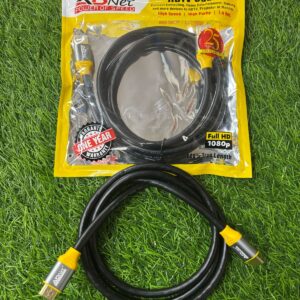 CCTV & Networking, CCTV Cable & Accessories, Computer Cable, HDMI Cable
HMDI CABLE 1.5M, BLACK 1.4V SUPPORTS 1080P AD-HD-29
- Delivers uncompressed digital video & multi-channel audio
- Crystal-clear resolution up to Full HD 1080p
- ARC Simplifies audio setup between TV and sound system
- Deep Color Support Vibrant, natural color reproduction
- Supports Dolby TrueHD, DTS-HD Master Audio, LPCM, and more
- Durable Construction with Gold-plated connectors
- 100% true length with 1 year replacement warranty
SKU: AD-HD-29 -
CCTV & Networking, Computer Accessories, Computer Cable, USB Adapter & Router
USB HUB 4 PORT AD816 DELUX, AD- UH-221
-41%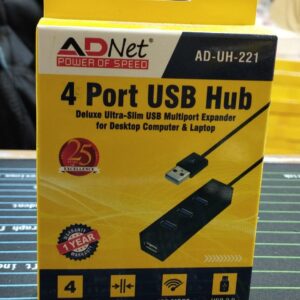 CCTV & Networking, Computer Accessories, Computer Cable, USB Adapter & Router
USB HUB 4 PORT AD816 DELUX, AD- UH-221
- 4-Port USB Hub Expand Your Connectivity
- Supports multiple devices at a time.
- Super Speed Data Transfer.
- Useful for laptops and desktops.
- Friendly and ergonomic design, easily portable.
- Built-in USB connector cable, no driver required
SKU: AD- UH-221-1 -
CCTV & Networking, Computer Accessories, Port Converters, Prime Port Converters, Prime Port Converters, Switches, Splitters & Extenders
HDMI EXTENDER 60M WITH 1 YEAR WARRANTY AD-HE -469
-22% CCTV & Networking, Computer Accessories, Port Converters, Prime Port Converters, Prime Port Converters, Switches, Splitters & Extenders
HDMI EXTENDER 60M WITH 1 YEAR WARRANTY AD-HE -469
- Long-Distance Transmission: Extends HDMI signals up to 60 meters (197 feet) using a single Cat5e/6 cable, offering unparalleled flexibility in your setup.
- Full HD 1080p Support
- Easy Plug-and-Play Installation\
- 1 YEAR WARRANTY
SKU: AD-HE-469

There are no reviews yet.